The allure of owning a slice of the ocean has always been hard to resist. With the rise of Exclusive Resorts, luxury developments, and private estates, large swathes of coastal and marine areas are being snapped up. This makes the coastline look like a high-stakes property game. Coastal communities, governments, environmentalists, and Yacht Owners are all feeling the heat and weighing in on the debate.
The trend of privatization isn’t just happening out of the blue. The appeal lies in the demand for exclusivity and the potential for profit. High-end resorts and private residences offer an irresistible promise of seclusion and luxury while attracting a wealthy clientele. For developers and investors, these coastal gems are gold mines. But it’s not just about big investments—it’s also about the public’s rights and environmental well-being.
Coastal regions have always been communal spaces where people gather, fish, swim, and enjoy the open sea. With privatization, this tradition faces a threat. When beaches and marine areas switch from public to private ownership, access often gets restricted or cut off entirely. That loss is felt deeply, especially by local communities tied to the sea culturally and economically.
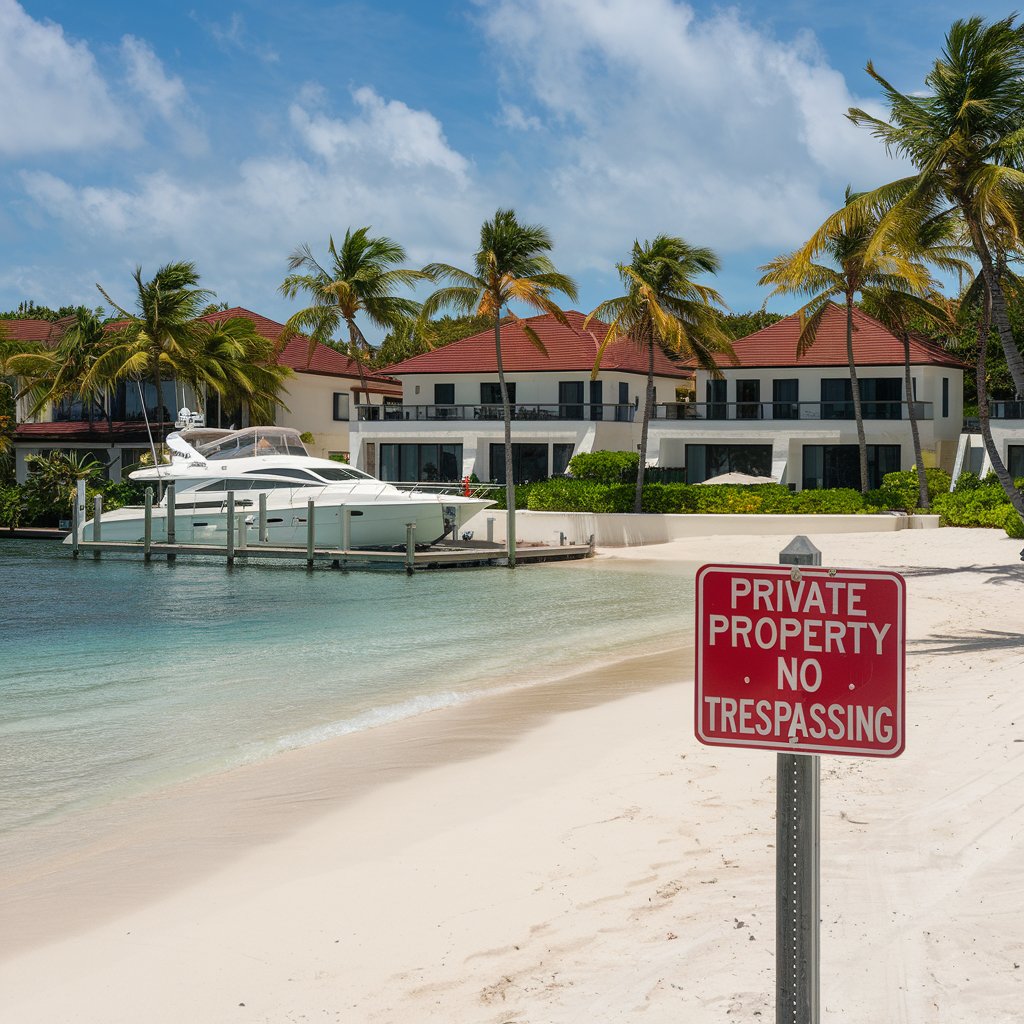
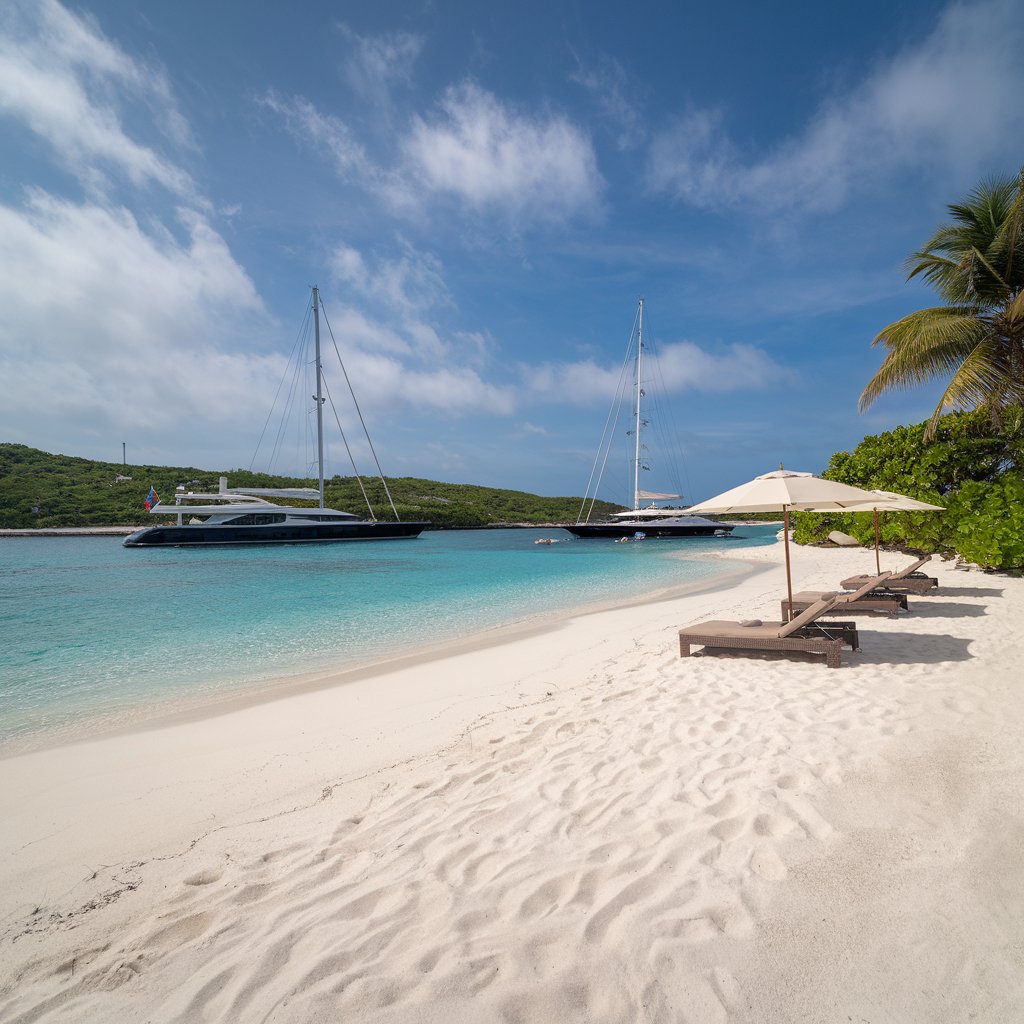
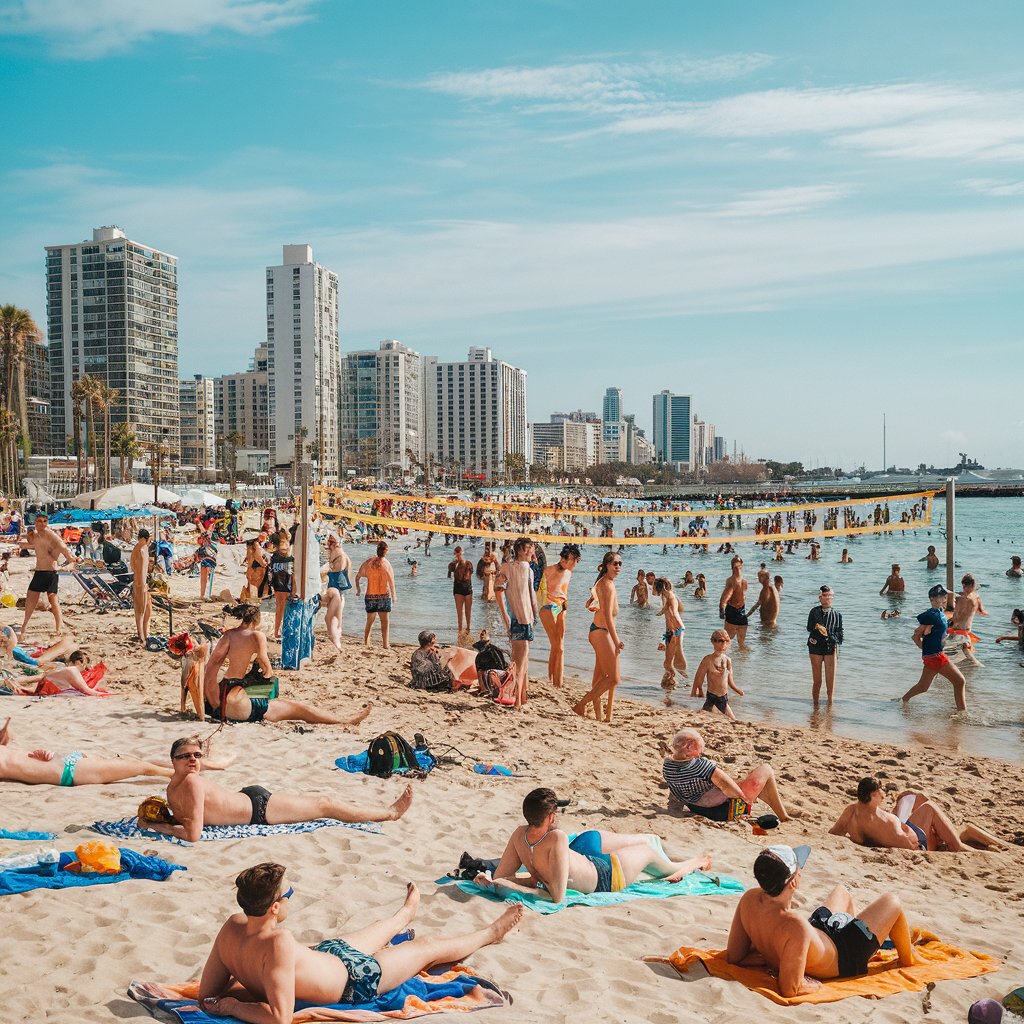
A Split-Screen Image Contrasting Two Adjacent Beach Areas.
For yacht owners, the privatization debate hits close to home. Some appreciate the exclusivity and security that private seascapes bring. But there’s also a long-standing tradition within the yachting world that sees the sea as a shared resource. Yacht Clubs and Marinas rally for open access, advocating for the protection of these treasured areas.
Understanding the various perspectives at play can help juggle the competing interests. Coastal communities want to maintain their Cultural Heritage and access, while developers are driven by profit and the lure of exclusivity. Governments and environmentalists have to balance economic growth with sustainability. It’s a tangled web, but gaining insight into each stakeholder’s stance can guide better decision-making and foster a more inclusive approach.

Experience the epitome of luxury and comfort at Pan Pacific Hotels and Resorts, where exceptional service meets world-class hospitality. Whether you’re seeking a serene escape or a vibrant city adventure, our stunning properties across Asia, Oceania, and North America provide the perfect backdrop for your journey. Indulge in elegantly designed rooms, award-winning dining, and rejuvenating wellness facilities that cater to your every need. Discover the Pan Pacific difference and elevate your stay to a new level of sophistication. Click on the Ad below and Book your unforgettable experience today!
Challenges and Impacts of Coastal Privatization
The legal landscape of coastal privatization can feel like a convoluted maze. Laws vary greatly from one region to another, influencing how private ownership of submerged lands and adjoining waters is handled. In some places, private entities can own and restrict access to these areas. Other jurisdictions enforce stricter public trust doctrines that prevent such privatization, ensuring the government holds these spaces for public use.
Balancing private property rights with public access is an ongoing challenge. The scales tip differently depending on where you are, reflecting different local values and economic motivations. The struggle lies in finding a middle ground that respects both private interests and the public’s right to enjoy coastal areas without feeling excluded.
Environmental concerns feature prominently in this debate. Large-scale developments often lead to significant changes in the natural surroundings. The construction of Marinas, Docks, and other infrastructure can disrupt fragile marine ecosystems and harm wildlife habitats. Increased pollution is another inevitable byproduct. It’s not just about preserving the beauty of these places; it’s about ensuring their long-term health and sustainability. Environmentalists argue that too often, short-term economic gains overshadow long-term ecological impacts.
A Coastal Area Undergoing Significant Development
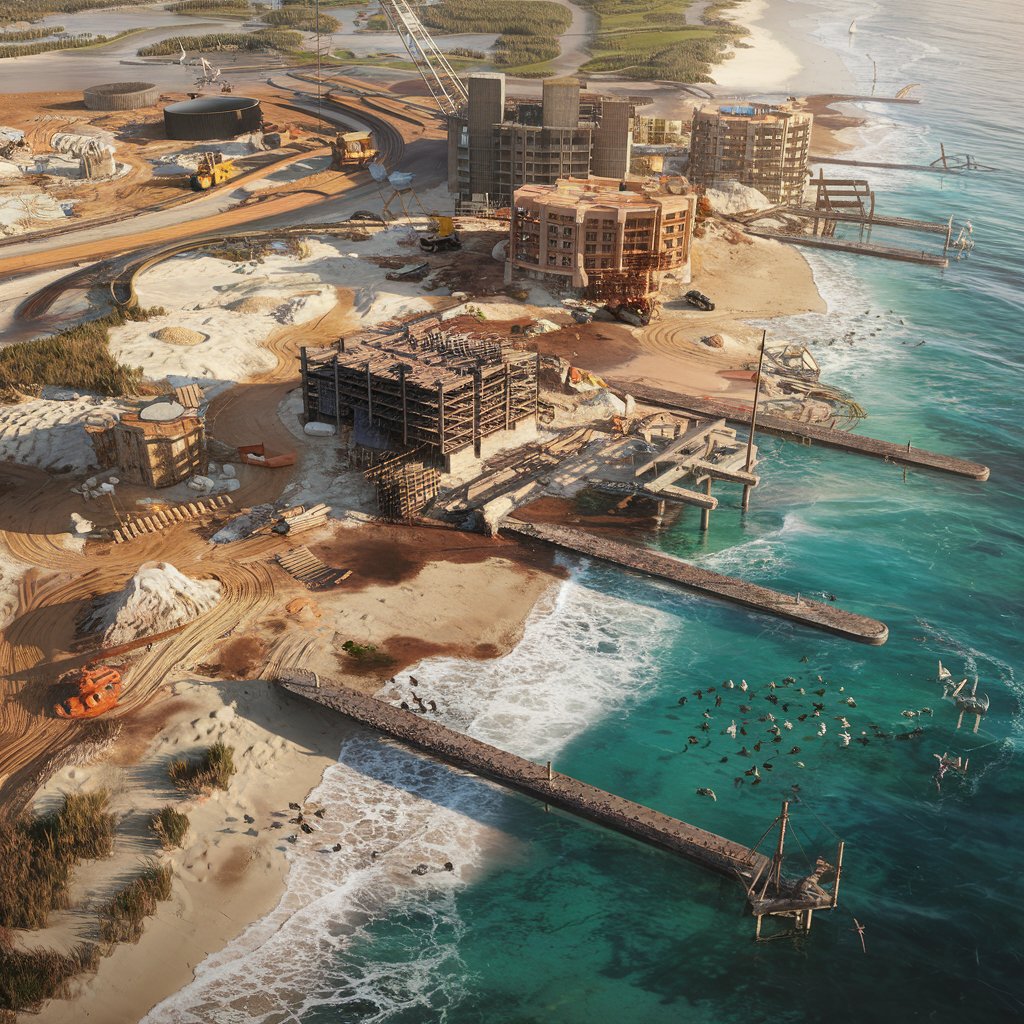
These changes can alter the social and economic fabric of these communities, often leaving them worse off. One region where this has caused a heated debate is the Caribbean. Beach privatization is a growing concern, as it often restricts access to what has traditionally been considered a public good. The allure of the region’s pristine coastlines has led to the development of luxury resorts, Marina Developments and private estates, which frequently claim exclusive rights to adjacent beaches.
This trend not only limits local communities’ access to the coastlines they have enjoyed for generations but also raises questions about environmental stewardship and sustainable tourism.
Furthermore, some argue that it may lead to environmental degradation, as privatized beaches are often altered to suit commercial needs, potentially disrupting local ecosystems. As Caribbean nations strive to balance economic growth with social equity and environmental protection, the issue of beach privatization remains a contentious topic, prompting calls for stronger regulations to ensure that beaches remain accessible to all.
The Yachting and Boating communities bring a unique perspective to the table. Many in these communities value the exclusivity that comes with privatized areas, but there is also a strong belief in the sea as a shared resource. There are many boating enthusiasts who are vocal advocates for maintaining open access and safeguarding the environment. Their active involvement in policy discussions and advocacy efforts can tip the scales towards more balanced and sustainable practices.
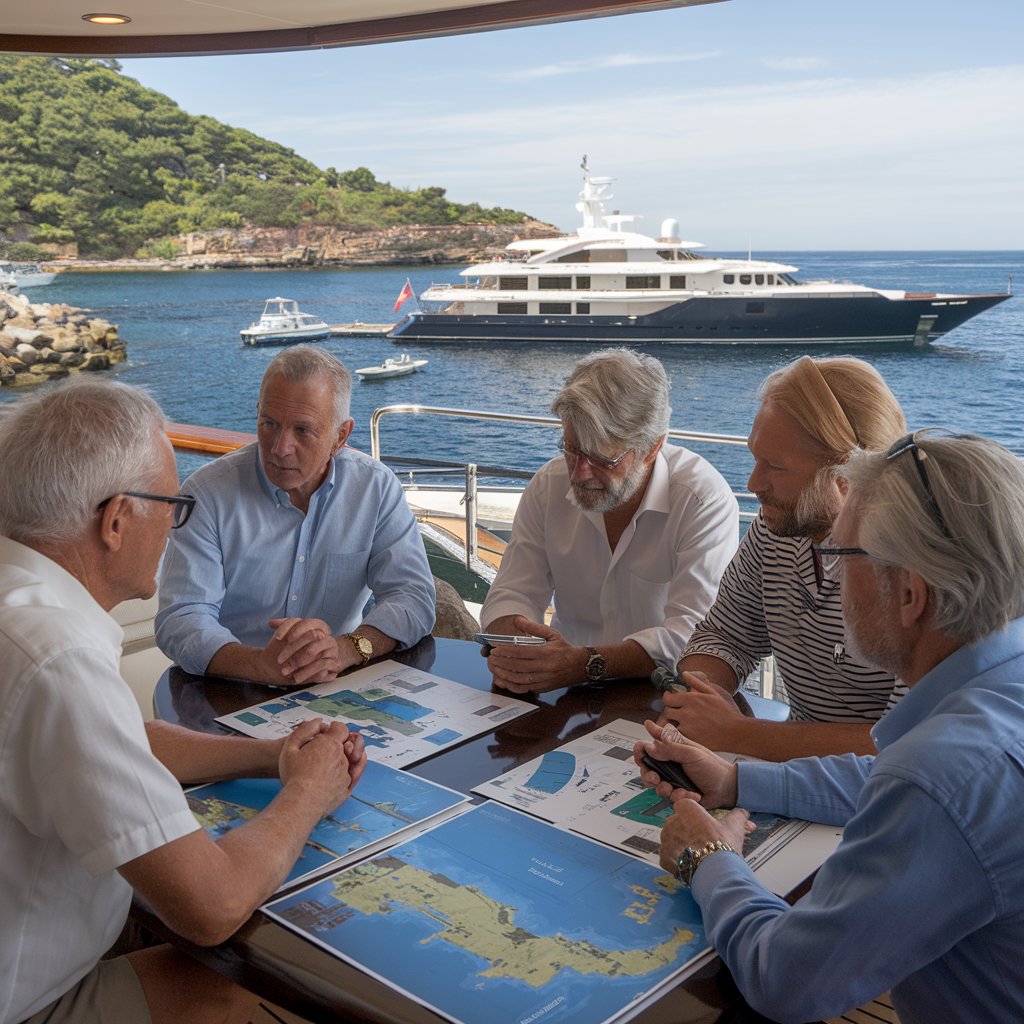
A gathering of yachting community members, including yacht owners, environmentalists, and local officials, discussing the issues of coastal privatization.
Seeking solutions involves a multi-faceted approach. Laws and regulations need to adapt to changing realities, finding ways to protect public access while respecting private property rights. Environmental impact assessments should become a mandatory part of any development plan on coastal areas. Encouraging sustainable tourism and environmentally friendly practices can help strike a better balance. Public and private stakeholders need to collaborate, keeping communication lines open to find common ground and implement policies that work for everyone.
**Our Website contains affiliate links. This means if you click and make a purchase, we may receive a small commission. Don’t worry, there is no extra cost to you. It’s a simple way you can support our mission to bring you quality content**.

Elevate your online presence with Leadpages! Whether you’re a small business, entrepreneur, or digital marketer, Leadpages offers the ultimate tool to create high-converting landing pages, pop-ups, and websites—no coding required. Boost your lead generation and sales effortlessly with customizable templates and easy integration with your favorite marketing tools. Start today and turn your clicks into customers with Leadpages!

You really nailed the complexity of how privatization is affecting public access to these beautiful spaces. I particularly appreciated how you highlighted the balance between the benefits of yachting for local economies and the potential downsides for public access to coastal areas. It’s such an important conversation that I think more people need to be aware of.
One thing that really caught my attention was your point about how the rise in private marinas is reshaping coastal communities. I’m curious, do you think there’s a way for public access and private development to coexist more harmoniously, or is it an inevitable trade-off? Also, I was wondering if you’ve seen any examples where communities have successfully navigated this balance. This article is so insightful and really got me thinking about the future of our coasts!
Hello Bob
Thank you for your thoughtful feedback! The coexistence of public access and private development is indeed a challenging but achievable goal. Balancing these interests often involves comprehensive planning and community engagement. Some communities have successfully managed this by implementing regulations that ensure public access to key coastal areas while allowing private development in designated zones. For example, places like the Mediterranean coast have seen models where public walkways are integrated with private marinas, providing both enjoyment and economic benefit. It’s essential for ongoing dialogue and collaborative efforts to create sustainable solutions that respect both public and private needs.
Interesting article on the rise of privatization in coastal areas due to yachting. While private developments can bring economic benefits, I’m curious about how this trend impacts local communities and public access to these coastal regions. Are there any examples where a balance has been successfully struck between private interests and public use? It would be great to explore ways to preserve the natural beauty and accessibility of these areas while still promoting growth
Hello Aris
Thank you for your thoughtful feedback! The rise of privatization in coastal areas due to yachting indeed brings both economic benefits and challenges, especially concerning local communities and public access. A successful example of balancing private interests with public use can be seen in places like the French Riviera, where regulations ensure public beaches and access paths remain open despite surrounding luxury developments. Exploring policies that promote sustainable development while preserving natural beauty and accessibility is essential for ensuring these coastal regions thrive for everyone. Would you be interested in learning more about specific strategies used in other coastal areas?
Hi Troy, I enjoyed reading about your recent post on yachting and coastal privatization.
your content is thorough and informative as well as quite visual and enticing. I can see that you are informing people of the pros and cons of coastal privatization, so would that mean you oppose it or support it?
You have also mentioned an ad for Pan Pacific Hotels Group, so are you suggesting that people use existing hotels in coastal areas rather than build their own oasis, I am not entirely sure where you are travelling with this?
regards Helen.
Hello Elen
Hi, I’m glad you enjoyed the post! My aim was to present a balanced view on coastal privatization, so I’m neither fully opposing nor supporting it—just highlighting the complexities involved. Regarding the Pan Pacific Hotels Group ad, I wanted to show that there are existing luxury options available, offering an alternative to private development. It’s more about providing choices rather than pushing for one over the other. I appreciate your questions and insights!